
Switzerland

St. Moritz to Zermatt in Winter

Two great resorts, two great trains and nine nights in the high Alps

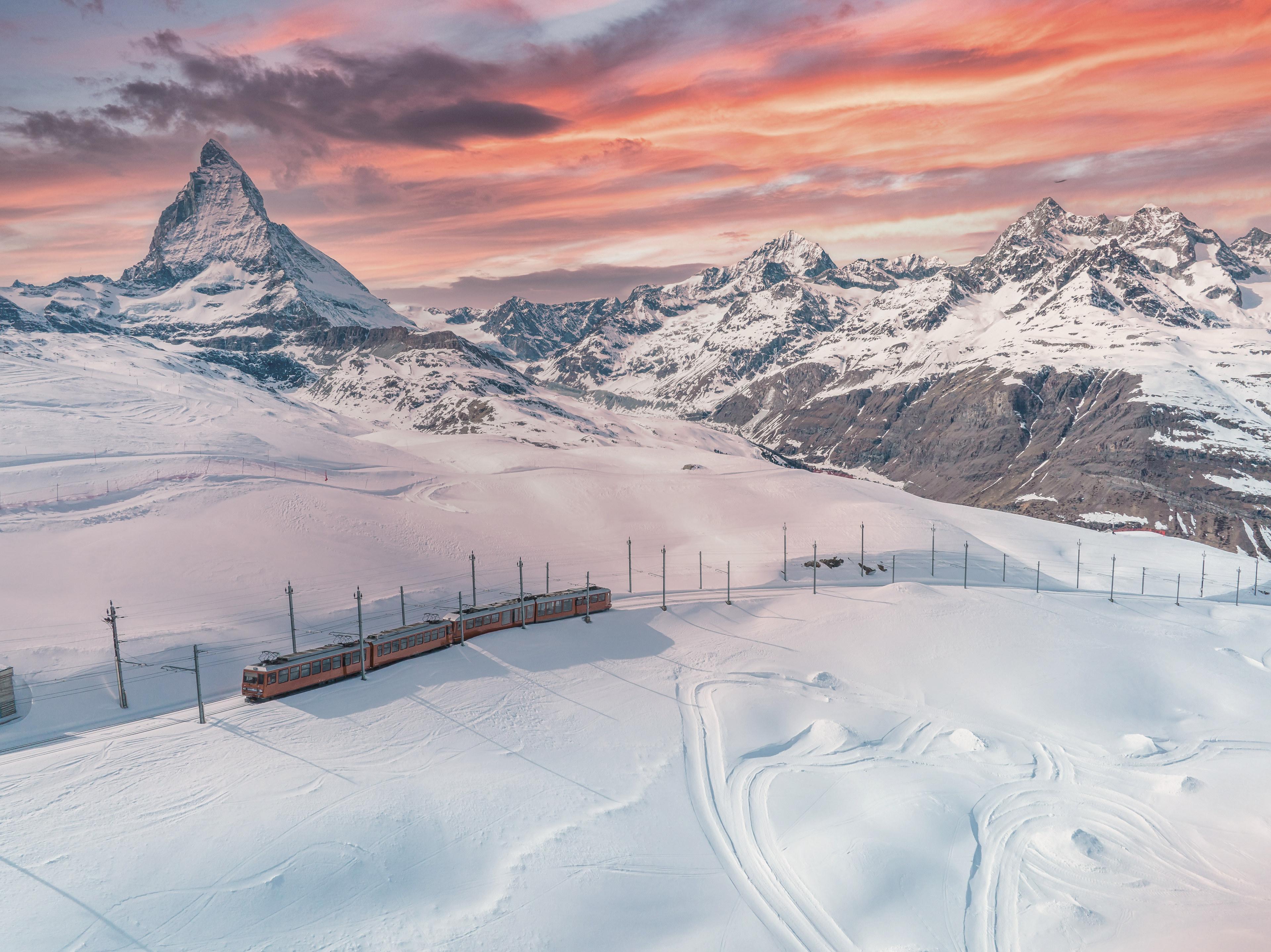
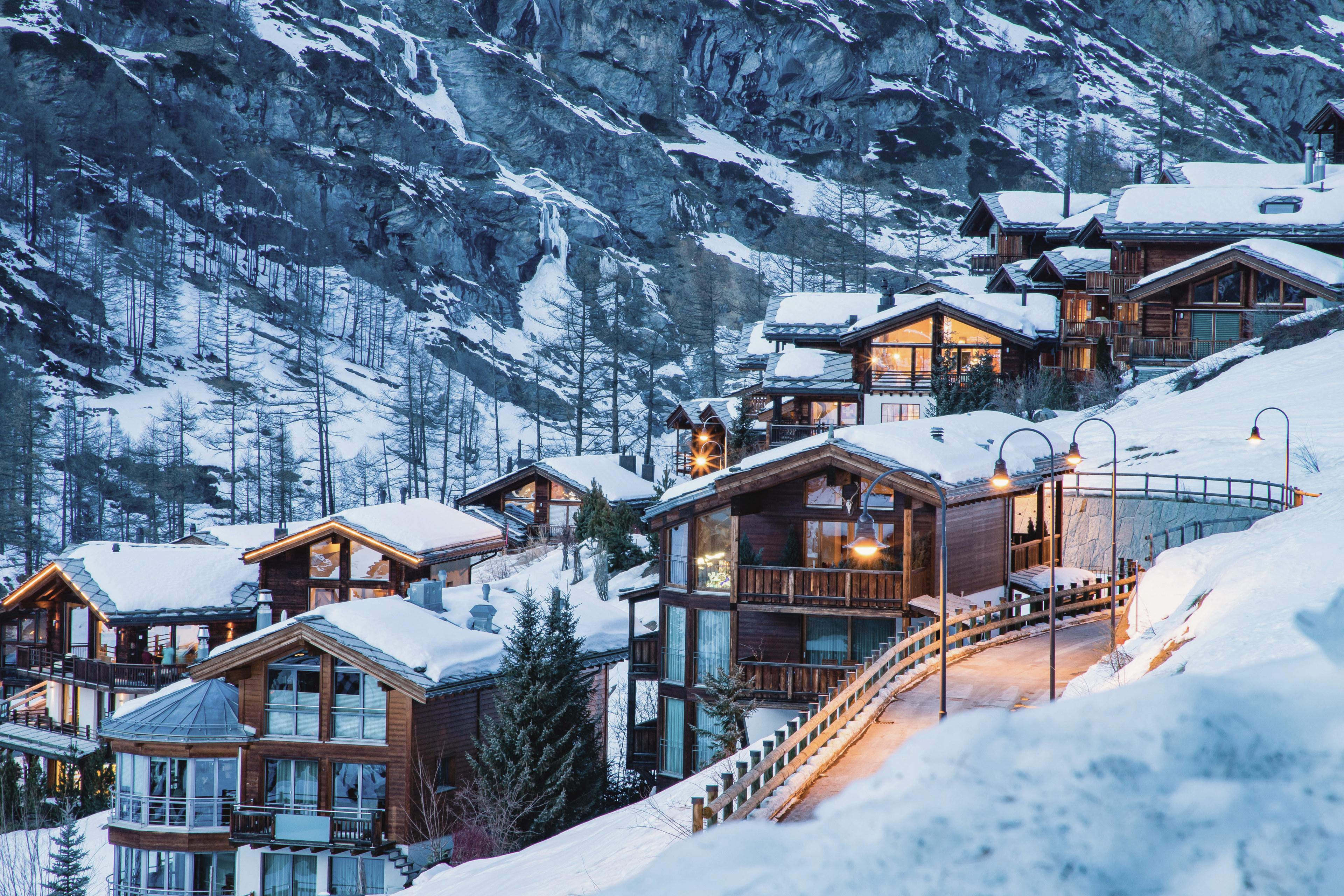
The Gornergrat railway in snow beneath the Matterhorn at sunset, above Zermatt

Overview

  • Level Grand Trains
  • Duration 10 Days, 9 Nights
  • Best Time to Go December, January, February, March
  • Interests Rail · Slow

This is a winter in the Alps taken the old way, by train, from one great resort to the other. A night aboard the Venice Simplon-Orient-Express carries you from Paris into Italy, and the red trains of the Rhaetian Railway carry you on from there, over the Bernina Pass in the snow and down into the Engadin. Three nights in St. Moritz, where the winter holiday was invented, are followed by the Glacier Express in Excellence Class, eight hours across the roof of Switzerland with a window seat and lunch in five courses, and then four nights in Zermatt, where cars are not allowed and the Matterhorn stands at the end of the street.

The two mountain hotels are the old grand houses of their villages, close to the lifts, and the skiing is yours to take as seriously as you like: Corviglia and Corvatsch above the Engadin, and from Zermatt the highest cable car station in Europe, with a run over the border to lunch in Italy. Those who do not ski lose nothing, because the railways and cable cars here climb to the same places the skiers go. The trip is written for the months when everything on it is running at once: the hotels keep a winter season from December into spring, the Glacier Express pauses each autumn, and the train from Paris does not run in January or February. Two days are long ones on the rails, the day into the Engadin and the day of the Glacier Express, and they are the two best days of the trip.

March, for long days, settled snow and the whole of the Glacier Express in daylight, and December, for the first snow and the lights. The Venice Simplon-Orient-Express runs from March to December, so the night aboard opens the trip in those two months; in January and February, the heart of the season, the trip begins in Zurich or Milan and is otherwise the same.

From

$11,750 per person

Prices are in USD, per person, based on double occupancy, and are estimates of the journey as written, paid to the hotels, railways and restaurants directly.


Ten days and nine nights: one aboard the Venice Simplon-Orient-Express in a Historic Cabin, with dinner, breakfast and lunch on the train, and eight at the hotels named below, with every other train ticket in first class and a seat in Excellence Class on the Glacier Express, lunch and wines included. Flights, lift passes, ski hire and lessons, and most meals off the trains are not included. Begun in Zurich or Milan without the night aboard, the trip costs a good deal less, and we will price it for you both ways.

View Sample Dossier

Highlights

  1. 01A night aboard the Venice Simplon-Orient-Express from Paris to Verona
  2. 02The Bernina line in snow, the highest railway crossing in the Alps, into the Engadin
  3. 03Three nights at the Kulm, the hotel where winter tourism began in 1864
  4. 04The Glacier Express in Excellence Class: twenty seats, each at a window, and lunch in five courses
  5. 05Four nights in Zermatt, with the Gornergrat railway from the village to ten thousand feet
  6. 06Skiing over the border from the Matterhorn to lunch in Italy

The Route

Each stop opens to its days, its train and its hotel.

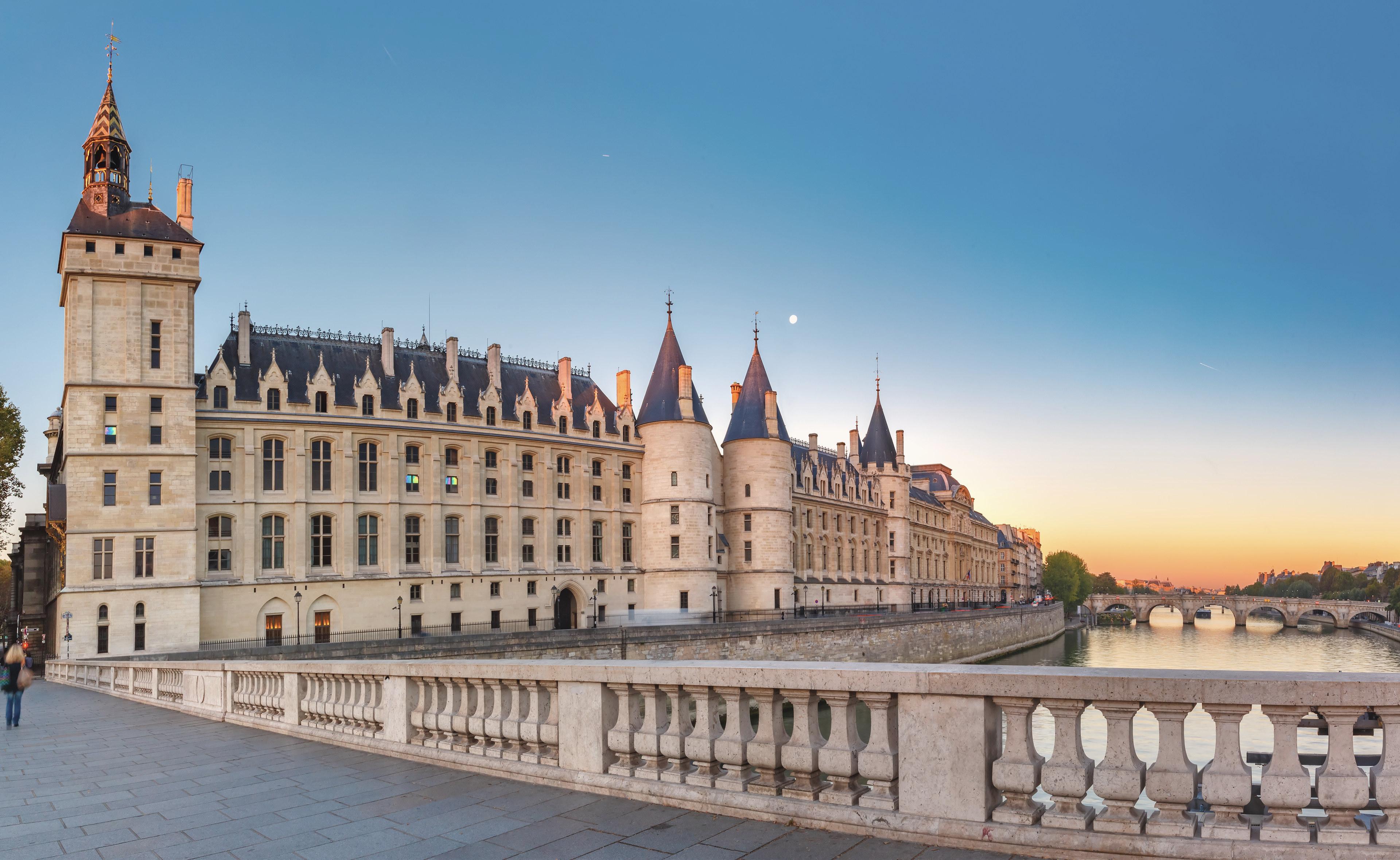
The Conciergerie and the Seine at first light, seen from the Pont au Change, Paris

Stop 1 of 4 · depart

Paris

You board in Paris in the afternoon, and the holiday begins before the train has left the city. The carriages are the originals of the 1920s, each with a history of its own, and your cabin is a private sitting room that becomes a bedroom while you are at dinner.

By train
Venice Simplon-Orient-Express. Paris to Verona. One night aboard, arriving the following afternoon.
Table
The dining cars of the train

The Trains

Every train here is named, timed and chosen for a reason, before you write to us.

  1. Day 1 · Paris

    Venice Simplon-Orient-Express

    • Paris to Verona
    • One night aboard, arriving the following afternoon

    The train runs from March to December, so this night opens the trip in March and in December. A Historic Cabin has a washbasin in a cabinet, with the lavatory at the end of the carriage, as it was in the 1920s; the Suites and Grand Suites add a private bathroom, and we will book whichever you prefer.

  2. Day 3 · St. Moritz

    Frecciarossa to Milan, the Lake Como line to Tirano, then the Bernina line

    • Verona Porta Nuova to St. Moritz
    • About eight hours in three trains, with time for lunch in Tirano

    The panoramic Bernina Express makes this climb once a day in winter; when its hour does not suit the connection, the regional train takes the same line past the same glaciers, and we choose between them when we book. Either way the pass is crossed in daylight.

  3. Day 6 · Zermatt

    Glacier Express, Excellence Class

    • St. Moritz to Zermatt
    • About eight hours

    Excellence Class is a single car of twenty seats, sold as a supplement to a first class ticket, and its seats go early; we reserve it first and build the rest of the trip around the date. In March the whole crossing is in daylight, and in December the light goes during the last half hour, on the climb to Zermatt.

Included

  • Ten days and nine nights: one aboard the Venice Simplon-Orient-Express in a Historic Cabin, with dinner, breakfast and lunch on the train, and eight at the hotels named below, with every other train ticket in first class and a seat in Excellence Class on the Glacier Express, lunch and wines included.

Not Included

  • Flights, lift passes, ski hire and lessons, and most meals off the trains are not included.

Begun in Zurich or Milan without the night aboard, the trip costs a good deal less, and we will price it for you both ways.

Photographs from St. Moritz to Zermatt in Winter

Day by Day

Itinerary

  1. Day 1

    Paris, and the train to Italy

    Paris

    By train · Venice Simplon-Orient-Express

    Paris to Verona. One night aboard, arriving the following afternoon.

    The train runs from March to December, so this night opens the trip in March and in December. A Historic Cabin has a washbasin in a cabinet, with the lavatory at the end of the carriage, as it was in the 1920s; the Suites and Grand Suites add a private bathroom, and we will book whichever you prefer.

    You board in Paris in the afternoon, and the holiday begins before the train has left the city. The carriages are the originals of the 1920s, each with a history of its own, and your cabin is a private sitting room that becomes a bedroom while you are at dinner. Dinner is four courses in one of the dining cars, with wines chosen by the sommelier, and it is the one evening of the trip for black tie rather than ski clothes. By the time you sleep the train is running toward the Alps.

    Stay  Venice Simplon-Orient-Express, Paris to Verona

    Table  The dining cars of the train

  2. Day 2

    Through the Alps to Verona

    Verona

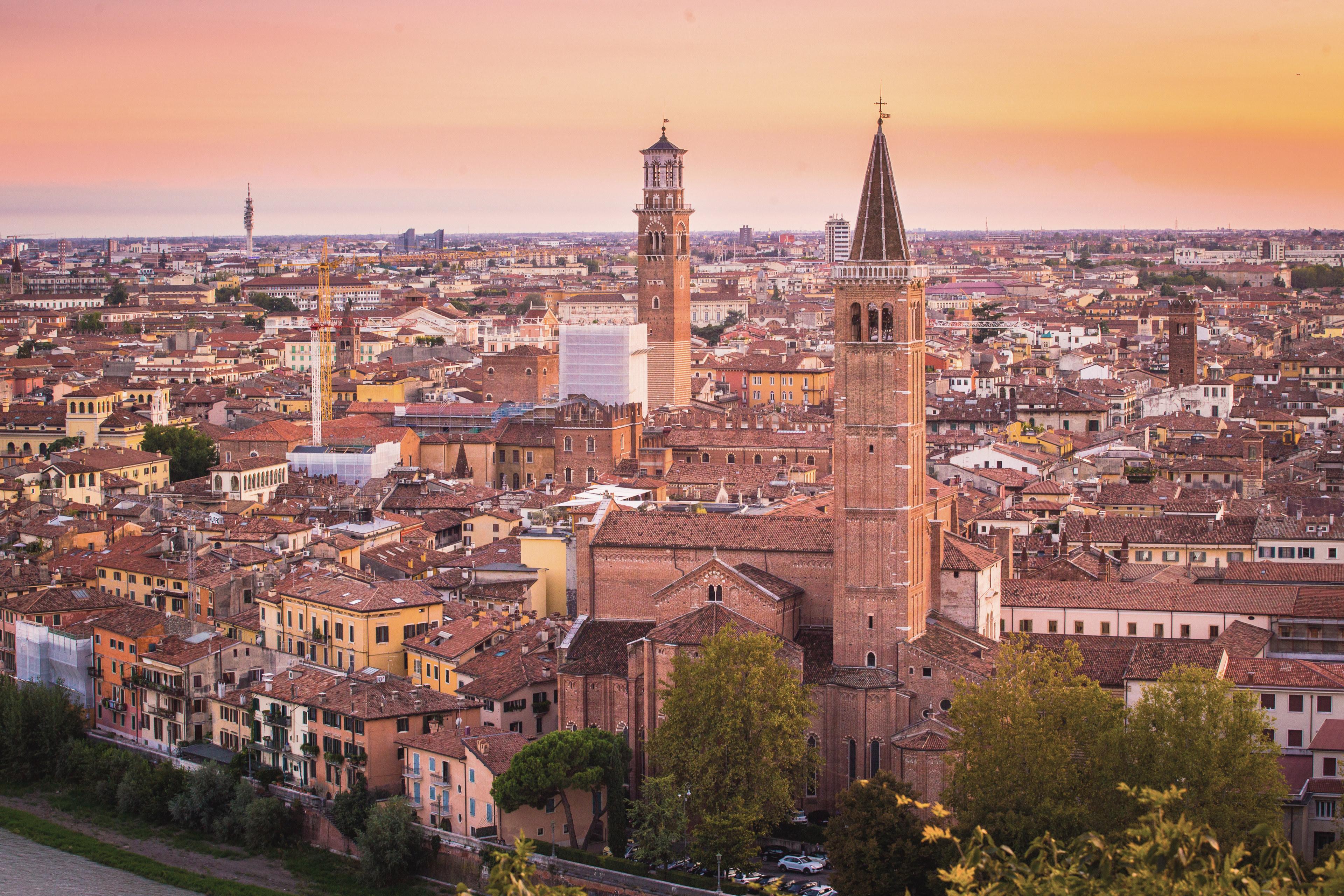
    Breakfast comes to your cabin, and the morning belongs to the window as the train crosses the Alps and comes down into Italy. Lunch is three courses in the dining car, and in the middle of the afternoon you step down at Verona while the train goes on to Venice without you. The Due Torri is a house of the fourteenth century on the square beside the church of Sant'Anastasia, in the oldest part of the city, and Mozart was once among its guests. The evening is for a walk: Piazza delle Erbe, the Roman arena, which has stood since the first century and still fills for the opera each summer, and the fortified bridge of Castelvecchio over the Adige. Dinner is in an osteria in the old town, and we will name the table in your plan.

    Stay  Due Torri Hotel, Verona

  3. Day 3

    Lake Como and the Bernina line

    St. Moritz

    By train · Frecciarossa to Milan, the Lake Como line to Tirano, then the Bernina line

    Verona Porta Nuova to St. Moritz. About eight hours in three trains, with time for lunch in Tirano.

    The panoramic Bernina Express makes this climb once a day in winter; when its hour does not suit the connection, the regional train takes the same line past the same glaciers, and we choose between them when we book. Either way the pass is crossed in daylight.

    The longest day of the trip, in three trains, each better than the last. A Frecciarossa takes you to Milan in a little over an hour; a regional train then runs north along the whole eastern shore of Lake Como, with the water in the window for the better part of an hour, and up the Valtellina to Tirano, where there is time for lunch. From Tirano the red train of the Rhaetian Railway starts through the streets of the town and climbs nearly six thousand feet without a rack: around the spiral viaduct at Brusio, past the lake at Le Prese, and up through the snow to the Bernina Pass, the highest railway crossing in the Alps, where Lago Bianco lies frozen beside the line. It comes down past the Morteratsch glacier into the Engadin, and you are at the Kulm in St. Moritz in time for dinner.

    Stay  Kulm Hotel, St. Moritz

    Table  Dinner at the hotel

  4. Day 4

    St. Moritz, Corviglia

    St. Moritz

    St. Moritz has held the Winter Olympics twice, in 1928 and in 1948, and its own mountain begins a few minutes from the hotel door. The funicular climbs from the village through Chantarella to Corviglia, and a cable car goes on from there to Piz Nair at just over ten thousand feet, with the lakes of the Engadin laid out below. The runs back down are wide, sunny and long, and the hotel's ski concierge arranges passes, skis and boots, and an instructor or a guide if you would like one. If you do not ski, ride up all the same for lunch on a terrace in the sun. Dinner is at the hotel.

    Stay  Kulm Hotel, St. Moritz

    Table  Dinner at the hotel

  5. Day 5

    St. Moritz, Corvatsch or the lake

    St. Moritz

    A second day in the Engadin, and a choice. Skiers cross the valley to Corvatsch, whose top station stands at nearly eleven thousand feet facing the glaciers of the Bernina, for the highest skiing in the valley. Everyone else has the lake, which freezes hard enough to carry a racecourse, and the Cresta Run, the ice track that the hotel's guests first built in the winter of 1884 and that is still made by hand every year. In the afternoon take the old funicular up Muottas Muragl for the view down the whole chain of lakes as the sun goes. Tomorrow's train leaves in the morning, so pack tonight.

    Stay  Kulm Hotel, St. Moritz

  6. Day 6

    The Glacier Express, in Excellence Class

    Zermatt

    By train · Glacier Express, Excellence Class

    St. Moritz to Zermatt. About eight hours.

    Excellence Class is a single car of twenty seats, sold as a supplement to a first class ticket, and its seats go early; we reserve it first and build the rest of the trip around the date. In March the whole crossing is in daylight, and in December the light goes during the last half hour, on the climb to Zermatt.

    The slowest express in the world takes about eight hours to cross from the Engadin to Zermatt, and Excellence Class is the finest way to make the crossing: twenty seats in a car of their own, each one at a window, with a concierge, a bar and your bags carried to the platform and from it. Champagne is poured as the train drops down the Albula line, spiraling inside the mountain and crossing the Landwasser Viaduct straight out of a tunnel in the cliff. Lunch arrives in five courses, with wines, as the train follows the young Rhine up toward its source; then the line climbs over the Oberalp Pass, its highest point, runs through Andermatt and under the Furka, and follows the Rhône down to Brig. The last hour is the climb to Zermatt beside the river Vispa, and the hotel meets the train.

    Stay  Mont Cervin Palace, Zermatt

    Table  Dinner at the hotel

  7. Day 7

    Zermatt, the Gornergrat

    Zermatt

    Zermatt allows no cars, and the first morning is quiet enough to hear the church bells. The Gornergrat railway leaves from the middle of the village and climbs on its rack to just over ten thousand feet, where the Matterhorn, the Gorner glacier and a ring of peaks above thirteen thousand feet stand all around the platform. Skiers clip in at the top for the long runs back toward the village; everyone else takes the train down again, stopping at Riffelberg for lunch in the sun. Keep the afternoon for the village itself: the old wooden barns on their stone stilts in the Hinterdorf, and the small museum beside the church that tells the story of the first ascent. Dinner is at the hotel.

    Stay  Mont Cervin Palace, Zermatt

    Table  Dinner at the hotel

  8. Day 8

    Zermatt, the Matterhorn and lunch in Italy

    Zermatt

    The cable cars on the far side of the village climb in stages to Matterhorn Glacier Paradise, at more than twelve thousand seven hundred feet the highest cable car station in Europe, where the skiing is on a glacier and the view takes in three countries on a clear day. From there the run goes over the border and down to Breuil-Cervinia in Italy, long and wide, for lunch on the sunny side of the mountain; the lifts bring you back in the afternoon, so carry your passport and watch the clock. Those who do not ski can make the same crossing by cable car when the wind allows. Tonight is the night for a fondue in one of the old wooden houses of the village, and we will book it.

    Stay  Mont Cervin Palace, Zermatt

  9. Day 9

    Zermatt, a day of your own

    Zermatt

    The last full day has no plan, on purpose. There is a third ski area still untried, reached by the underground funicular to Sunnegga, with the hamlet of Findeln below it and its terraces facing the Matterhorn. There is the spa at the hotel, which is large enough to lose an afternoon in, and the mountaineers' cemetery beside the church, which is worth a quiet half hour. Or there is simply the Bahnhofstrasse at dusk, when the peak turns pink and the whole village stops to look. The last dinner is ours to arrange.

    Stay  Mont Cervin Palace, Zermatt

  10. Day 10

    Down the valley and home

    Zermatt

    The morning train runs down the valley to Visp in a little over an hour, and a direct train goes on from there to the airport at Zurich or at Geneva; allow about three and a half hours to Zurich and four to Geneva. If you are traveling on, Milan is just over two hours from Brig through the Simplon, and the trip can end there as easily as here.

Where You Will Stay

Paris to Verona · 1 night

Venice Simplon-Orient-Express

A train of restored 1920s sleeping cars with its own dining cars and bar, and the grandest way there is to arrive in the Alps. Your cabin is a sitting room by day and a bedroom by night, a steward looks after your carriage at any hour, and dinner, breakfast and lunch are served on board.

A Historic Cabin has a washbasin and no bathroom of its own; the Suites and Grand Suites have one. The train does not run in January or February, when the trip begins in Zurich or Milan.

Verona, Piazza Sant'Anastasia · 1 night

Due Torri Hotel

A house of the fourteenth century in the oldest part of Verona, beside the church of Sant'Anastasia and five minutes on foot from Piazza delle Erbe, with five stars and a guest book that includes Mozart. One night here turns a change of trains into an evening in one of the handsomest cities in Italy.

St. Moritz · 3 nights

Kulm Hotel

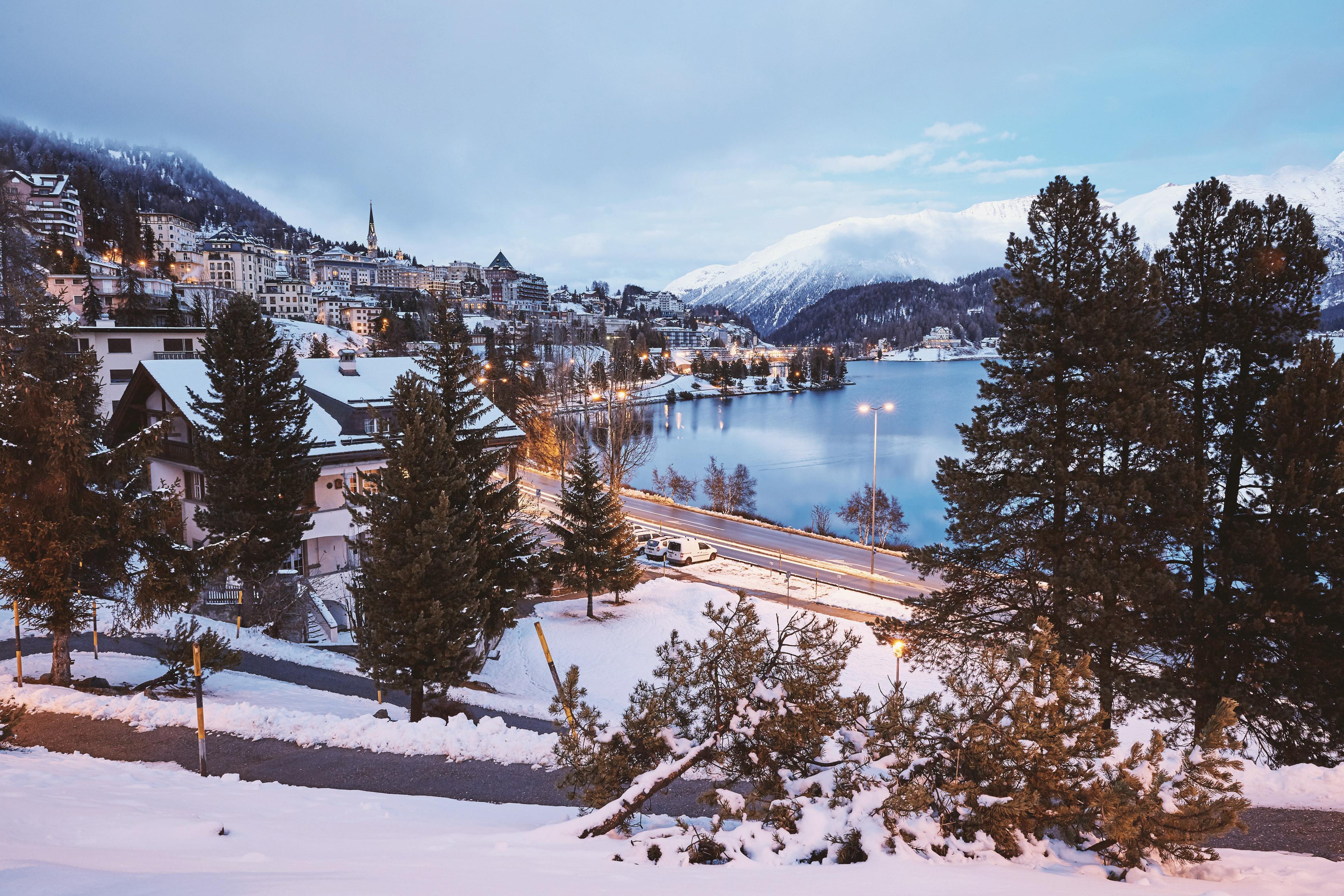
The house where winter tourism began: in 1864 its owner wagered his summer guests that they would enjoy the Engadin in the snow, and they stayed until spring. It stands above the lake a few minutes from the Corviglia funicular, with a ski concierge, a spa and the Cresta Run a short walk away.

Badrutt's Palace, down the street, is the alternative, and we will offer it if you prefer it.

Zermatt, Bahnhofstrasse · 4 nights

Mont Cervin Palace

The grand hotel of Zermatt, on the main street a few minutes from the station and from the Gornergrat railway, with rooms that face the Matterhorn, a large spa and its own restaurants. Four nights here is enough to ski all three areas and still have a day for nothing at all.

Essentials

Getting in

United States passport holders enter the Schengen area, which includes Switzerland, without a visa for stays of up to ninety days and, once the European travel authorization known as ETIAS begins, register online before they fly. Your passport should be valid for three months beyond your return. The Entry/Exit System now records your fingerprints and photograph at the first Schengen border, which adds a few minutes at the airport in Paris and nothing afterward. Carry your passport on the mountain in Zermatt, because the ski area crosses into Italy.

Money

Two currencies: the euro in France and Italy, and the Swiss franc from the Bernina Pass onward. Cards are taken almost everywhere in Switzerland, mountain restaurants included, and service is included in Swiss prices, so a tip is a matter of rounding up. Across the border above Zermatt the prices are in euros again.

Weather and what to pack

St. Moritz stands at about six thousand feet and Zermatt at a little over five thousand, and both are properly cold from December to February, with long sunny days by March. Bring ski clothes or hire them there, good sunglasses and sunscreen for the glacier, and boots with a grip for the village streets, which are often icy. Dinner aboard the train is an occasion, and evening dress is part of it; for the hotels we will tell you where a jacket is expected.

Luggage

The cabin aboard the Venice Simplon-Orient-Express has racks for an overnight bag and little more, so pack what you need for the night separately; we will tell you exactly how the larger cases travel when we book. Switzerland forwards luggage from station to station for a modest charge, and in Excellence Class on the Glacier Express your bags are carried to the platform and from it. Skis and boots are best hired in each resort through the hotel, which saves carrying them across three countries.

Seats and reservations

Every train after the first is in first class. Excellence Class on the Glacier Express is a single car of twenty seats and is reserved before anything else on the trip; the Frecciarossa is reserved as well, and the Bernina Express when we take it. Where a day uses two or three trains, the tickets are separate, each its own contract with its own railway, so we plan every connection with time to spare.

Access

The Venice Simplon-Orient-Express, with its narrow corridors and original doors, is not suitable for wheelchair users, and its operator says so plainly; begun in Zurich, the trip is far kinder. The Glacier Express carries wheelchairs with notice, and we will confirm each lift and mountain railway for you before you travel. The villages are another matter in winter, with snow and ice underfoot. Tell us what you need and we will shape the days around it.

More Trips

View All Trips
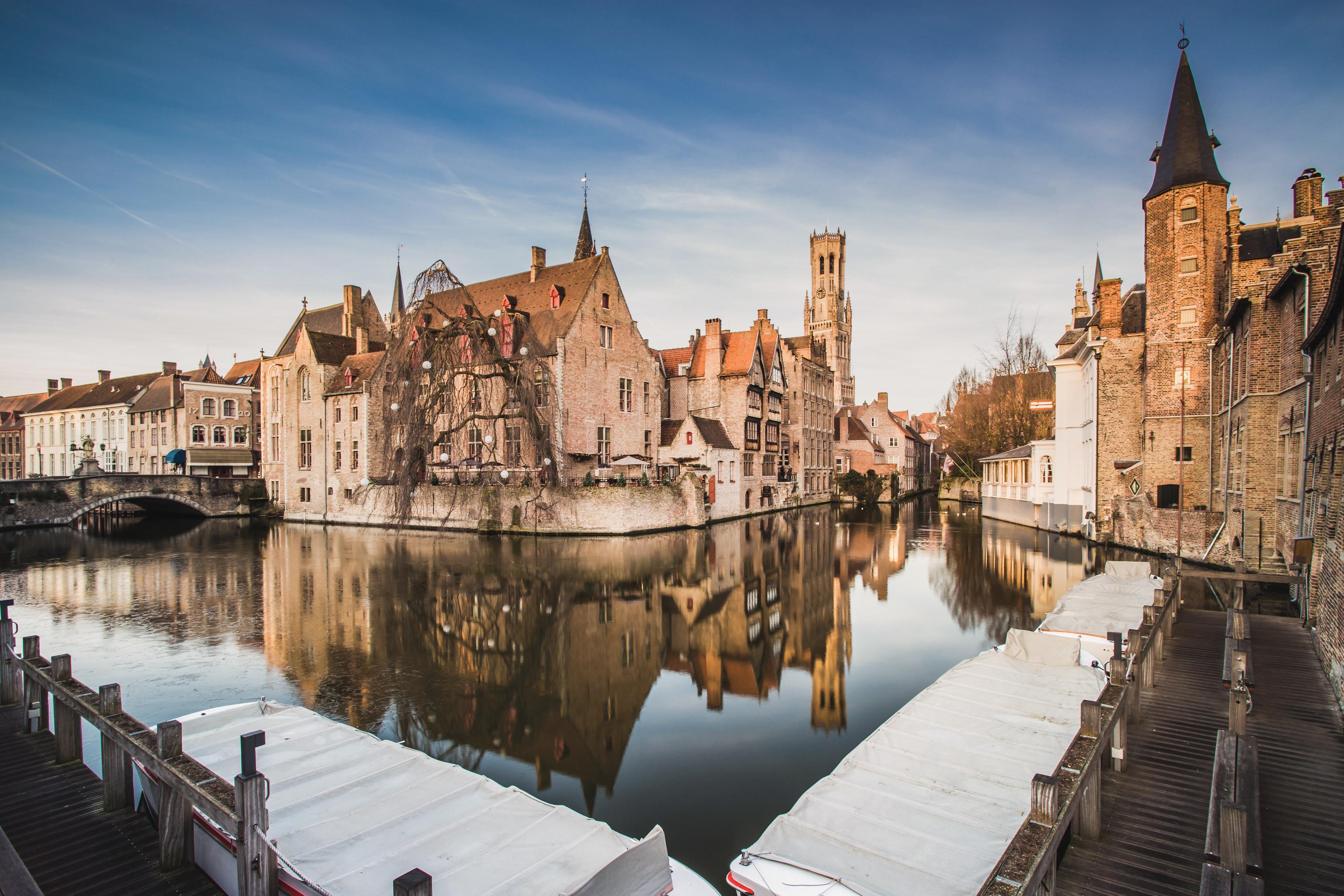
The Rozenhoedkaai and the Belfry reflected in the canal, BrugesSignature

Italy to Belgium

The Renaissance by Rail

Paris · Florence · Rome · Munich · Nuremberg · Bruges

The trains: Venice Simplon-Orient-Express · Frecciarossa · Frecciarossa, then the Railjet over the Brenner Pass · ICE · ICE to Frankfurt and Brussels, then the Belgian InterCity

13 DaysGrand TrainsFrom $15,500

View Trip
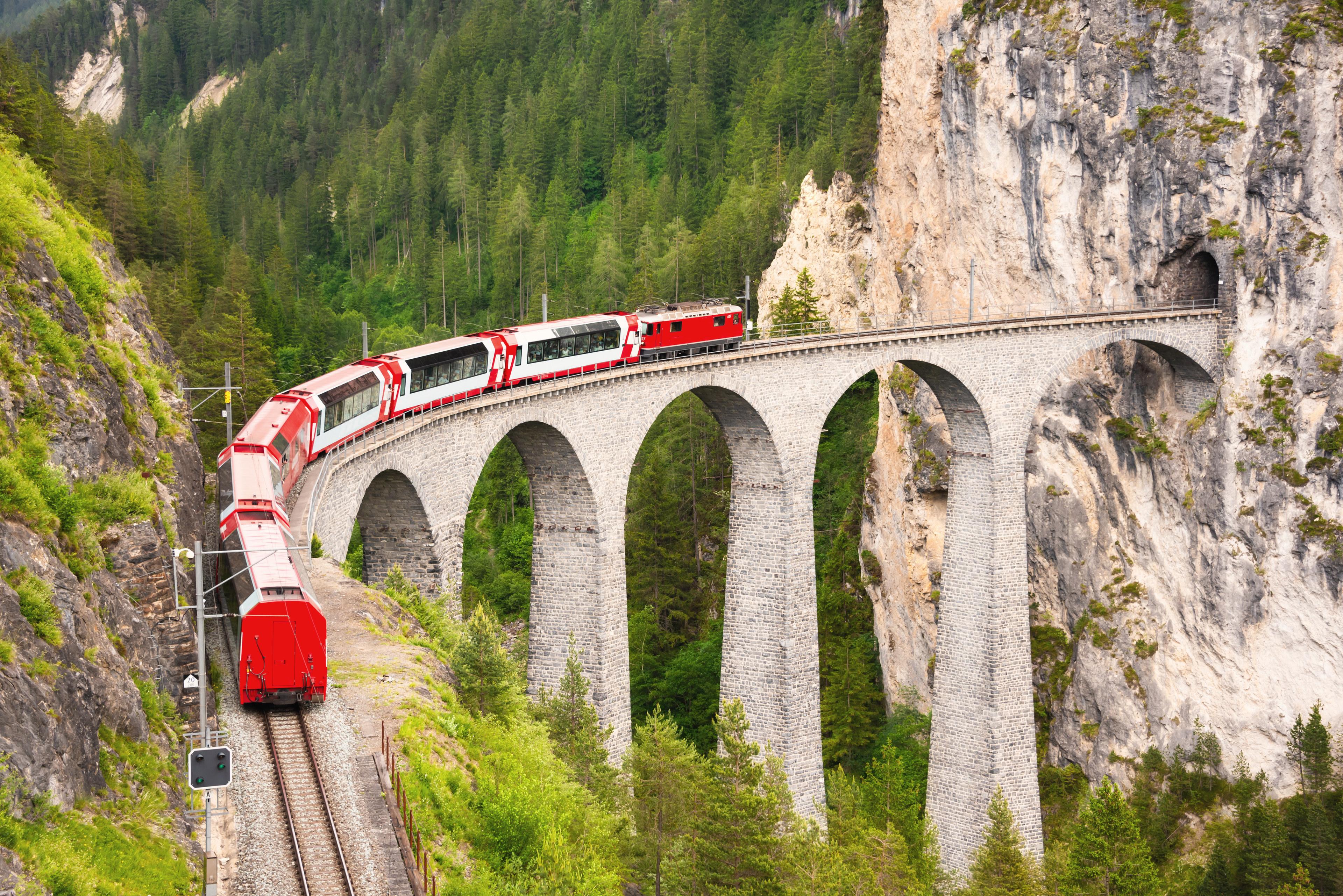
A red train crossing the Landwasser Viaduct in the Swiss AlpsSignature

Germany to Italy

Berlin to Milan by Rail

Berlin · Prague · Vienna · Innsbruck · Bolzano · Brig · Pontresina · Tirano · Milan

The trains: EuroCity, the Elbe valley line · Railjet · Railjet over the Brenner Pass · Frecciarossa to Milan, then the EuroCity through the Simplon · Glacier Express · Bernina Express · Regional train along Lake Como

14 DaysWindow SeatFrom $1,650

View Trip

Let us plan your trip.

You are welcome to take this trip as written, shape it to your liking, or make it the starting point for something entirely your own.

Every inquiry is read personally, and we reply within 24 hours.