 Bespoke
Italy
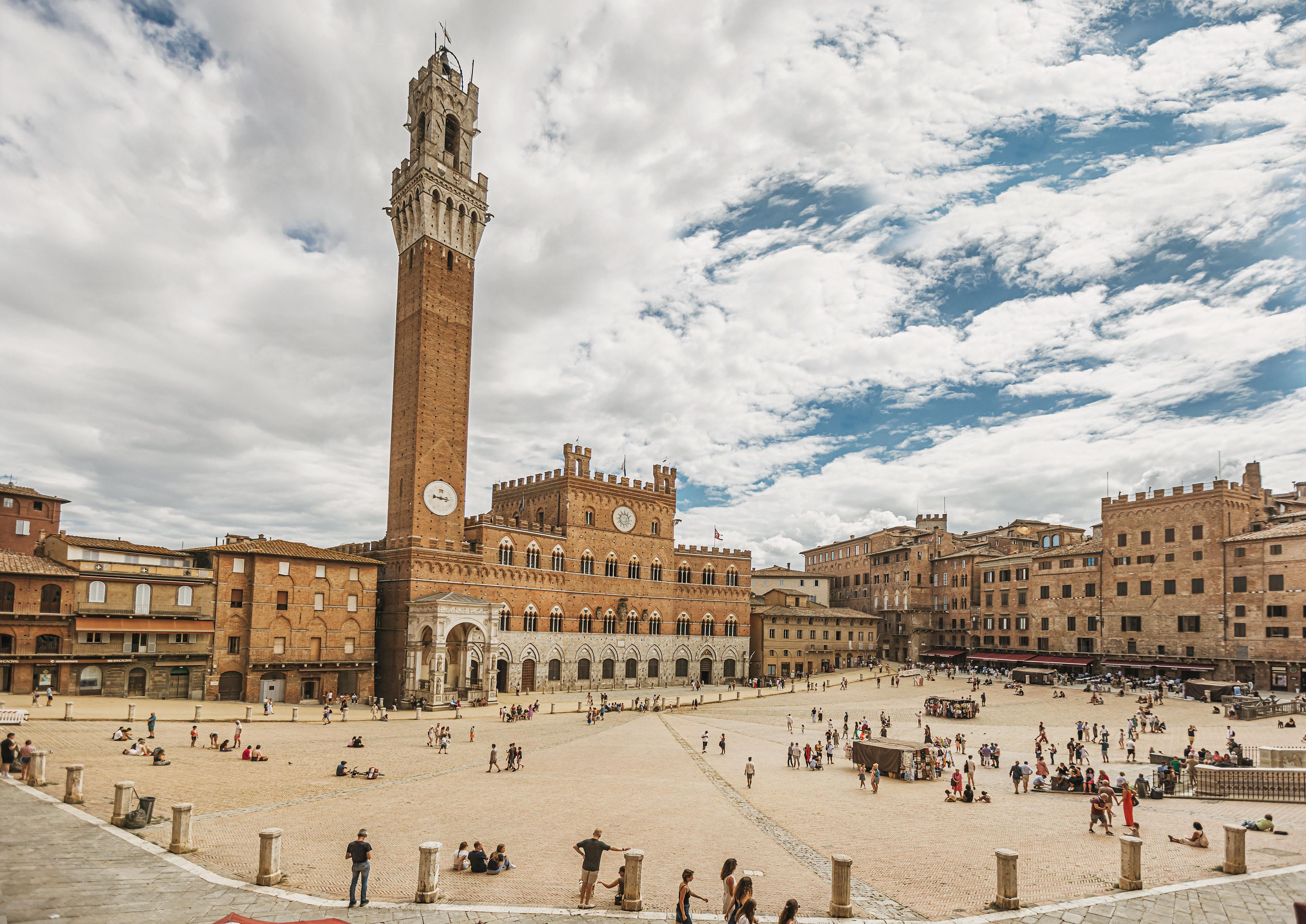
The Grand Tour to Siena
Venice · Florence · Siena
The trains: Frecciarossa or Italo · Regionale, Firenze to Siena · Regionale to Florence, then Frecciarossa or Italo to Rome
9 DaysFirst Class & Sleeper TrainsFrom $4,450
View Trip
Twelve nights from Paris to Bruges, the first aboard the Venice Simplon-Orient-Express
This is the Renaissance followed in the direction it traveled: north, from the city where it began, over the Alps, to the trading cities that answered it. It opens with a night aboard the Venice Simplon-Orient-Express from Paris, which sets you down in Florence the following afternoon. From there the fast trains carry you to Rome, over the Brenner Pass to Munich and Nuremberg, and across Germany to Bruges. Florence is Brunelleschi, Botticelli and the Medici; Rome is Michelangelo and Raphael at the height of their powers; Munich and Nuremberg belong to Albrecht Dürer, who crossed these same mountains to study in Venice and carried what he learned home; and Bruges, where the Medici kept a bank and Jan van Eyck kept his workshop, shows what the north was painting all the while.
The night aboard is the grandest way there is to arrive in Italy: carriages of the 1920s, dinner in evening dress, and Italy in the window by lunch. The train calls at Florence on only a few departures each year, and this trip is written to begin on one of them; on any other date it begins in Florence itself and loses nothing but the night aboard. After that the trains are first class and fast, and the hotels are the grand houses of each city, a short walk from what you came to see. The days are shaped around the things that close: the Uffizi and the Alte Pinakothek on Mondays, the Vatican Museums on most Sundays. Two of the days are long ones on the rails, from Rome to Munich and from Nuremberg to Bruges, and we would rather say so now than have you discover it on the platform.
April, May, September and October, when Florence and Rome are warm without being hot and the light lasts into the evening. The Venice Simplon-Orient-Express runs from March to December and calls at Florence on only a few of its departures, so the night aboard decides the date; begun in Florence, the trip can leave on almost any day in those months.
From
$15,500 per person
Prices are in USD, per person, based on double occupancy, and are estimates of the journey as written, paid to the hotels, railways and restaurants directly.
Thirteen days and twelve nights: one aboard the Venice Simplon-Orient-Express in a Historic Cabin, with dinner, breakfast and lunch on the train, and eleven at the hotels named below, with every other train ticket in first class. Flights, the city taxes paid at each hotel, museum tickets and most meals off the train are not included. Begun in Florence without the night aboard, the trip costs a good deal less, and we will price it for you both ways.
Each stop opens to its days, its train and its hotel.
Stop 1 of 6 · depart
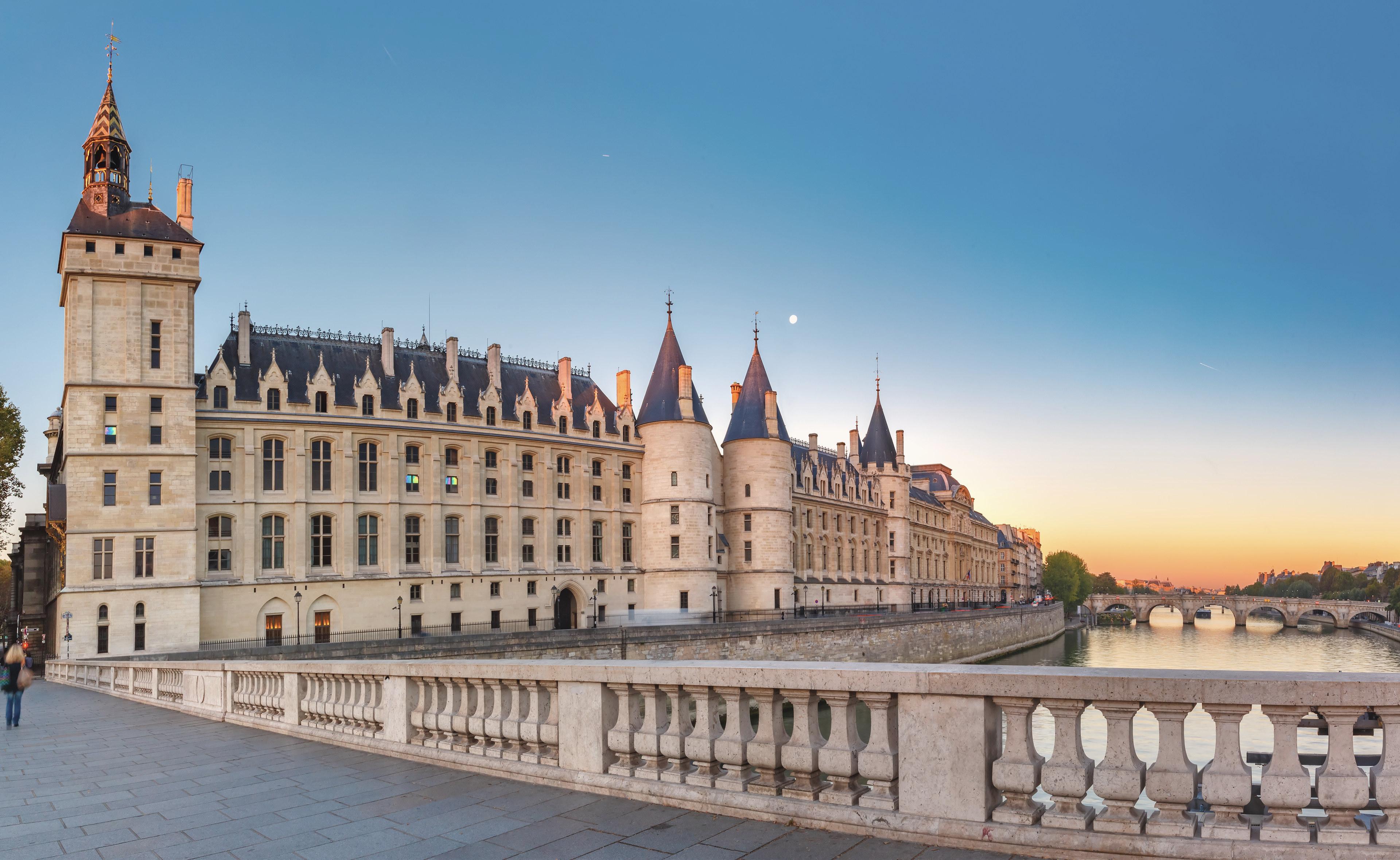
The trip begins on a platform in Paris in the afternoon, where your steward takes your bags and shows you to your cabin. The carriages are the originals of the 1920s, restored, each with a history of its own.
Every train here is named, timed and chosen for a reason, before you write to us.
Day 1 · Paris
The train calls at Florence on only a few of its departures each year. A Historic Cabin has a washbasin in a cabinet, with the lavatory at the end of the carriage, as it was in the 1920s; the Suites and Grand Suites add a private bathroom, and we will book whichever you prefer.
Day 5 · Rome
South of Florence the fast line is known as the Direttissima, and it is the most scenic hour of high speed railway in Italy: the hills of the Valdarno first, then the valley of the Tiber.
Day 8 · Munich
The Brenner is the lowest of the great Alpine passes and the only main line crossing of the Alps without a summit tunnel, and this plan crosses it in daylight. A direct train between Rome and Munich has been announced, and when it runs we will put you on it. Those who would rather not spend a day on the rails can fly it in an hour and a half, and we will arrange that instead.
Day 10 · Nuremberg
The shortest journey of the trip, and it leaves the whole afternoon for the old town.
Day 11 · Bruges
First class throughout. The two changes are planned with time to spare, because a missed connection on a day like this costs an evening in Bruges.
Included
Not Included
Begun in Florence without the night aboard, the trip costs a good deal less, and we will price it for you both ways.
Day by Day
Day 1
Paris
By train · Venice Simplon-Orient-Express
Paris to Florence. One night aboard, arriving the following afternoon.
The train calls at Florence on only a few of its departures each year. A Historic Cabin has a washbasin in a cabinet, with the lavatory at the end of the carriage, as it was in the 1920s; the Suites and Grand Suites add a private bathroom, and we will book whichever you prefer.
The trip begins on a platform in Paris in the afternoon, where your steward takes your bags and shows you to your cabin. The carriages are the originals of the 1920s, restored, each with a history of its own. Your cabin is a private sitting room by day; while you are at dinner it becomes a bedroom, with an upper and a lower berth made up in white linen. Dinner is four courses in one of the dining cars, with wines chosen by the sommelier, and evening dress is part of the occasion. There is a bar car for afterward, and nowhere you need to be until Florence.
Stay Venice Simplon-Orient-Express, Paris to Florence
Table The dining cars of the train
Day 2
Florence
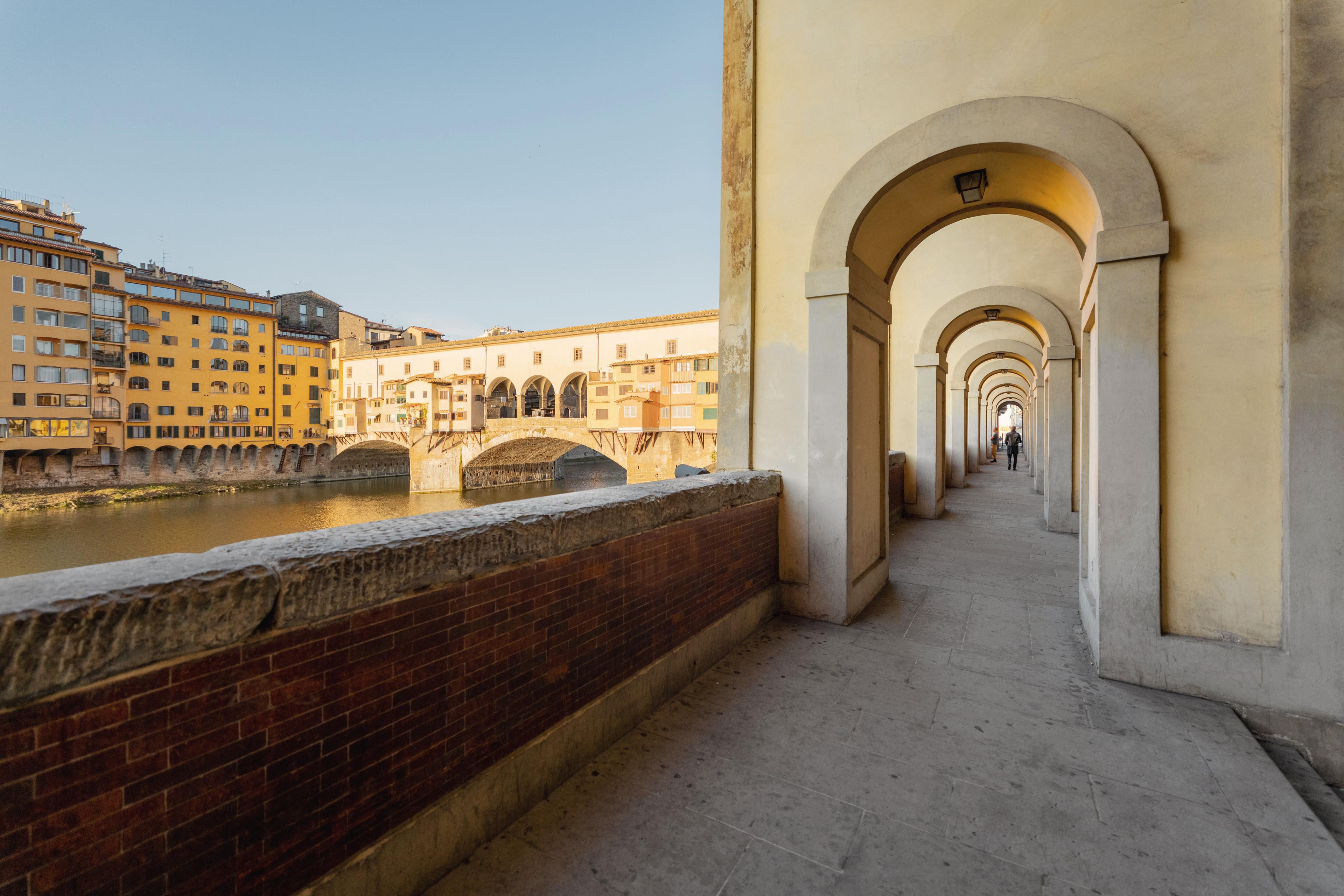
Breakfast comes to your cabin, and the morning belongs to the window: the mountains first, then the long descent into Italy. Lunch is three courses in the dining car as the train runs south, and in the early afternoon you step down in Florence. The Hotel Savoy stands on Piazza della Repubblica, in the middle of the old city, with the Duomo, the Uffizi and the Ponte Vecchio each a few minutes away on foot. Spend what is left of the day outdoors: the cathedral and its dome from the square, the Piazza della Signoria and the sculpture under its loggia, and the Ponte Vecchio as the light goes. Dinner is at Irene, the hotel's own Tuscan table on the piazza.
Stay Hotel Savoy, Florence
Table Irene, at the hotel
Day 3
Florence
The Renaissance had a banker, and the first full day is given to the family. Begin at San Lorenzo, the Medici parish church, which Brunelleschi rebuilt for them, and go on to the Medici Chapels behind it, where Michelangelo carved the tombs and the figures of Night and Day, Dawn and Dusk. A few steps away is the palace the family built for itself, and in its chapel the Procession of the Magi, which Benozzo Gozzoli painted around the walls with the Medici riding in the retinue of the kings. In the afternoon, climb Brunelleschi's dome on a named slot, four hundred and sixty three steps between its two shells, or keep to the ground and see Ghiberti's bronze doors, the originals of which are in the cathedral museum behind the apse. Dinner is yours to choose, and we will name a table in your plan.
Stay Hotel Savoy, Florence
Day 4
Florence
The morning belongs to the Uffizi, on a reserved entry; the gallery is closed on Mondays, which decides the shape of the week. Here are Botticelli's Birth of Venus and Primavera, Leonardo's Annunciation, the only panel painting Michelangelo is known to have finished, and the great altarpiece that a Medici banker in Bruges commissioned from Hugo van der Goes and shipped home; remember it, because the trip ends in the city it was sent from. Afterward cross the Ponte Vecchio to the Oltrarno, where the workshops are, for the Brancacci Chapel, booked in advance: Masaccio's frescoes, thirty minutes, ten people at a time, closed on Tuesdays. End the day in the Boboli Gardens behind the Pitti Palace, or at the Accademia with the David if you would rather.
Stay Hotel Savoy, Florence
Day 5
Rome
By train · Frecciarossa
Florence, Santa Maria Novella to Roma Termini. About an hour and a half.
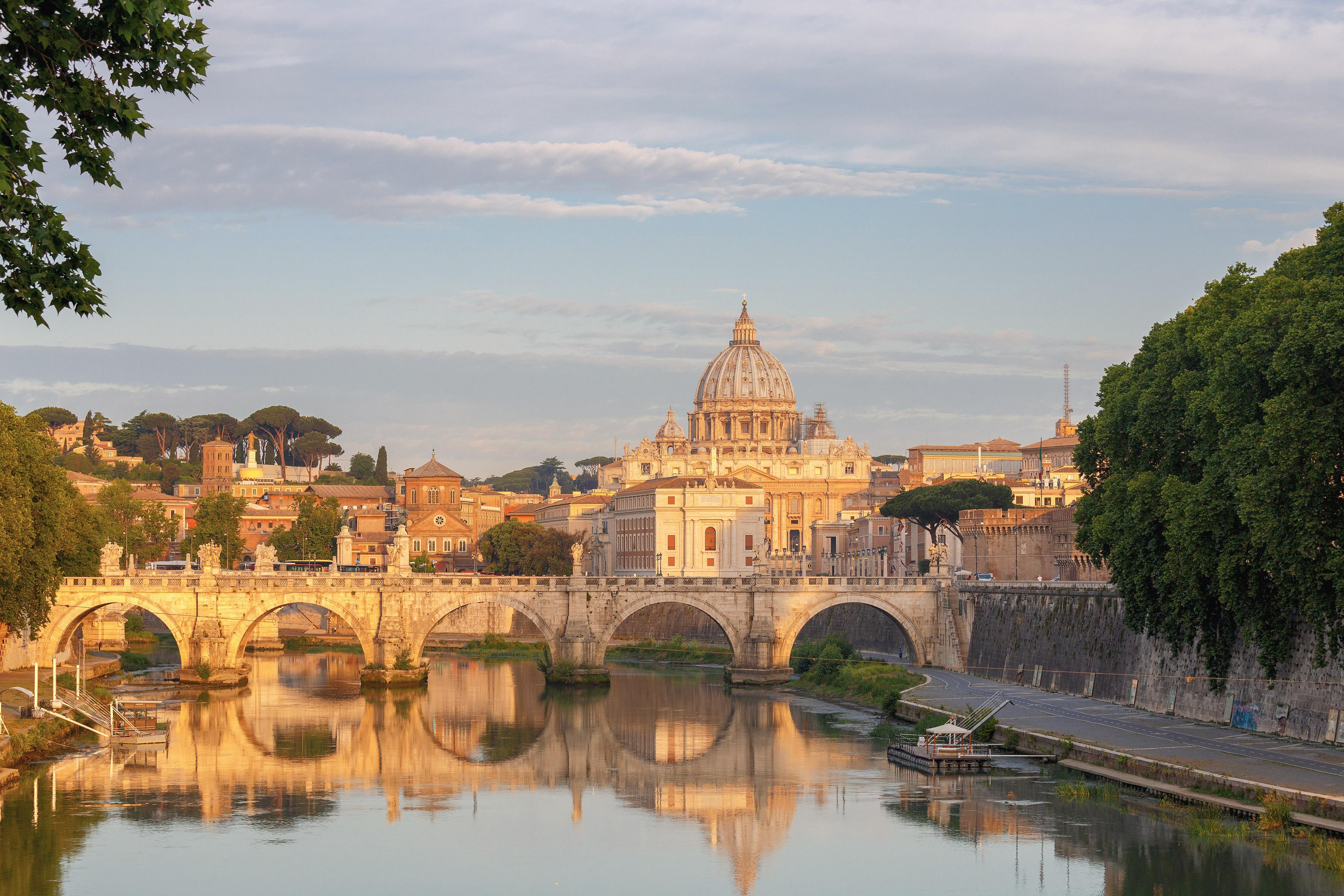
South of Florence the fast line is known as the Direttissima, and it is the most scenic hour of high speed railway in Italy: the hills of the Valdarno first, then the valley of the Tiber.
The Frecciarossa leaves from Santa Maria Novella, ten minutes on foot from the hotel, and reaches Rome in about an hour and a half, running through the hills of Tuscany and down the valley of the Tiber. You are at the Hotel de Russie, between Piazza del Popolo and the Spanish Steps, in time for lunch in its garden, which climbs the Pincian Hill in terraces behind the house. The afternoon is a walk through the Renaissance in Rome at street level: Santa Maria del Popolo at the end of the street, with the chapel Raphael designed for the banker Agostino Chigi; then south to the Pantheon, where Raphael is buried, and to Santa Maria sopra Minerva behind it, where Michelangelo's Risen Christ stands beside the altar. Dinner is at Le Jardin de Russie, in the garden.
Stay Hotel de Russie, Rome
Table Le Jardin de Russie
Day 6
Rome
We book the first entry of the morning to the Vatican Museums, which are closed on Sundays except the last of each month, and the day is arranged around that. The Sistine Chapel holds both ends of Michelangelo's life as a painter: the ceiling, finished in 1512 when he was thirty seven, and the Last Judgment on the altar wall, begun more than twenty years later. On the way are the rooms Raphael painted for the same pope, the School of Athens among them. Afterward comes the basilica itself: the Pietà that Michelangelo carved at twenty four, just inside the door, and overhead the dome he designed as an old man and did not live to see finished. The afternoon is yours, and the garden at the hotel is a good place to spend it.
Stay Hotel de Russie, Rome
Day 7
Rome
Raphael came to Rome at twenty five and died there at thirty seven, and the last morning in the city is his. Cross the Tiber to the Villa Farnesina in Trastevere, the pleasure house he decorated for Agostino Chigi: the Triumph of Galatea in one loggia, and the story of Cupid and Psyche across the ceiling of the next. The villa keeps its own hours, and we set the visit by them. The afternoon is for the Borghese Gallery, entered only by reservation, for Raphael's Deposition and Titian's Sacred and Profane Love, or for nothing at all on the terraces of the Pincio above the hotel. Tomorrow is a long day on the rails, and an early night is no hardship here.
Stay Hotel de Russie, Rome
Day 8
Munich
By train · Frecciarossa, then the Railjet over the Brenner Pass
Roma Termini to Munich Hauptbahnhof. Nine and a half to ten hours, with one change at Verona or Bolzano.
The Brenner is the lowest of the great Alpine passes and the only main line crossing of the Alps without a summit tunnel, and this plan crosses it in daylight. A direct train between Rome and Munich has been announced, and when it runs we will put you on it. Those who would rather not spend a day on the rails can fly it in an hour and a half, and we will arrange that instead.
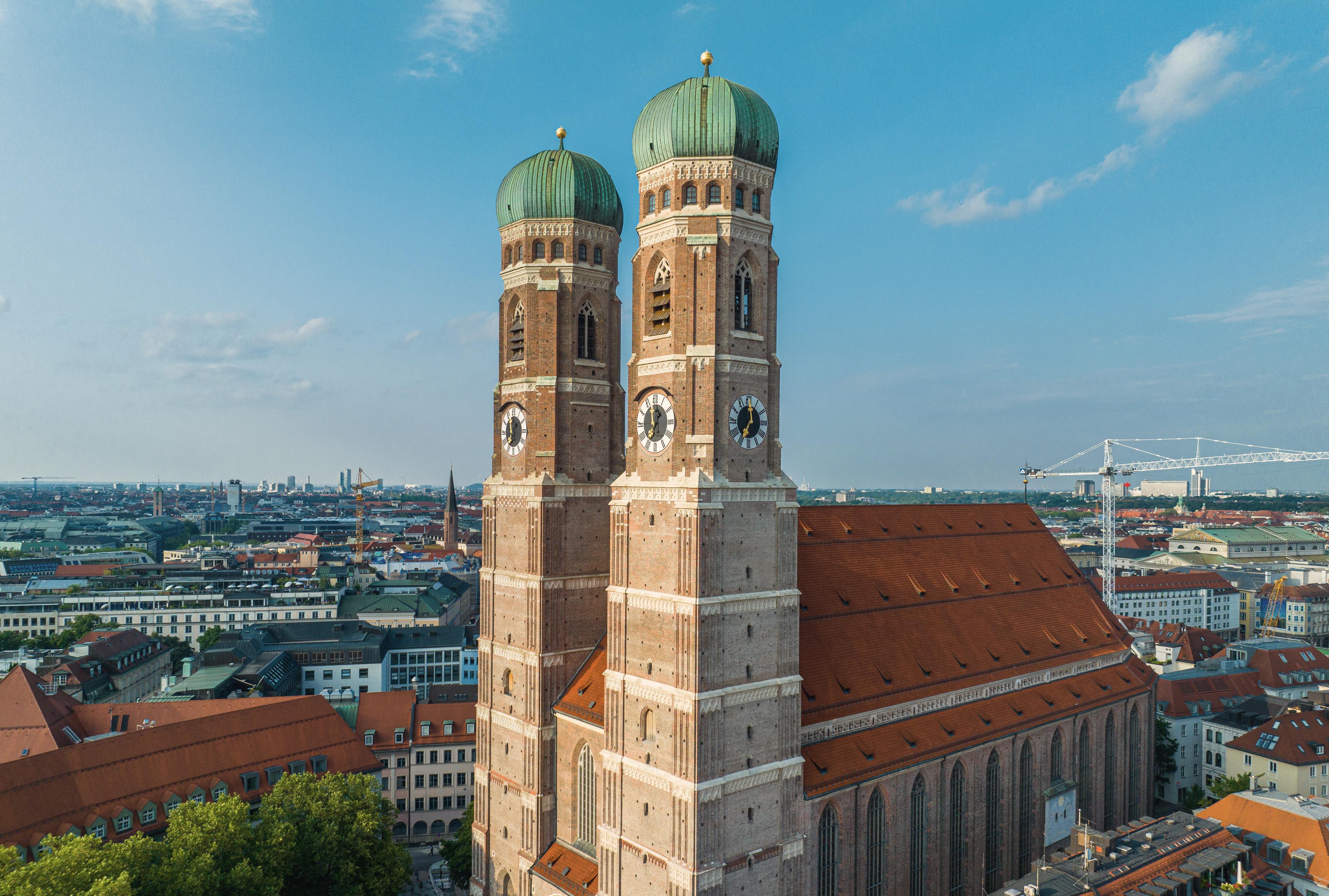
This is the longest day of the trip, and the one on which the Renaissance crosses the Alps. A morning Frecciarossa carries you north past Florence and Bologna to the foot of the mountains, where you change to the Railjet for the climb: up the valley of the Adige past Trento, where the council that answered the Reformation met, on and off, for eighteen years, through Bolzano, and over the Brenner Pass, the road Albrecht Dürer took to Venice and back. Lunch is in the restaurant car. The line comes down through Innsbruck and along the Inn, and you are in Munich by evening, at the Mandarin Oriental in the old town, a few minutes from Marienplatz. Dinner is at the hotel, and it has been earned.
Stay Mandarin Oriental, Munich
Table Dinner at the hotel
Day 9
Munich
The Alte Pinakothek, closed on Mondays, is one of the great picture galleries of Europe, and it holds the painting on which this trip turns: the self portrait Albrecht Dürer made in 1500, at twenty eight, facing the viewer as no painter had shown himself before. Near it hang his Four Apostles, Altdorfer's Battle of Alexander at Issus, and a Leonardo and a Raphael to show what the north was looking at. In the afternoon walk to the Residenz, the palace of the Bavarian dukes, for the Antiquarium, a vaulted hall built to hold their collection of ancient sculpture and painted from end to end. The evening belongs to the Hofbräuhaus, founded as the ducal brewery in 1589 and open every day, a short walk from the hotel.
Stay Mandarin Oriental, Munich
Table Hofbräuhaus
Day 10
Nuremberg
By train · ICE
Munich Hauptbahnhof to Nuremberg Hauptbahnhof. About an hour.
The shortest journey of the trip, and it leaves the whole afternoon for the old town.
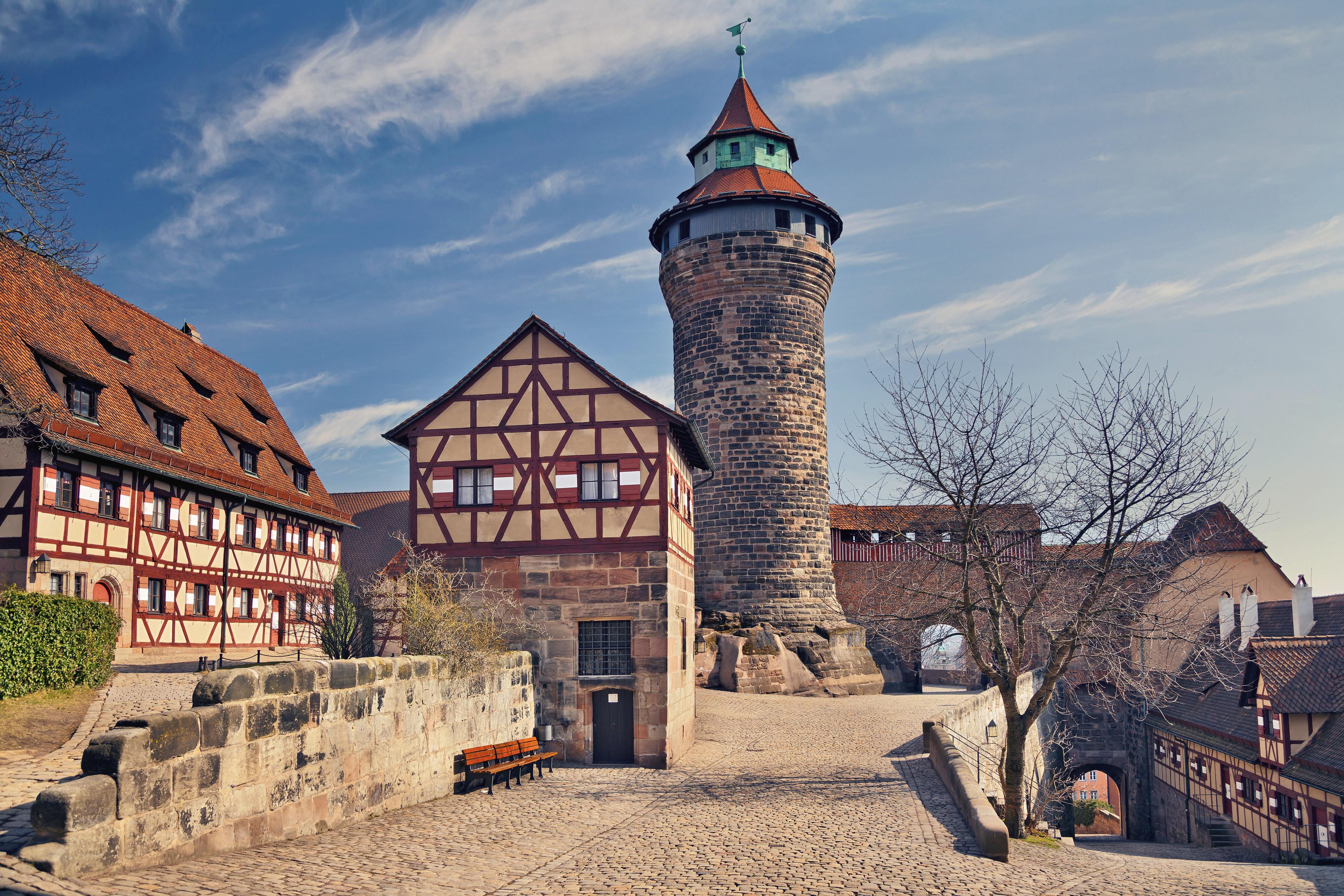
The ICE reaches Nuremberg in about an hour, and your hotel stands directly opposite the station, at the gate of the old town. Walk up through it to the house below the castle where Dürer lived and worked for nearly twenty years, from 1509 until his death; the rooms are open, and in the print room the techniques he used are still demonstrated. Above it is the Imperial Castle, with the old town laid out beneath the walls, and on the way down are the two great churches, St. Sebald and St. Lorenz, furnished by the sculptors of his generation. Nuremberg has a second history, and it is told at the Palace of Justice, where Courtroom 600 held the trials that began in November 1945; the room is sometimes closed for events, and we confirm before you travel.
Stay Le Méridien Grand Hotel Nuremberg, Nuremberg
Day 11
Bruges
By train · ICE to Frankfurt and Brussels, then the Belgian InterCity
Nuremberg Hauptbahnhof to Bruges. About seven hours, with changes at Frankfurt and Brussels.
First class throughout. The two changes are planned with time to spare, because a missed connection on a day like this costs an evening in Bruges.
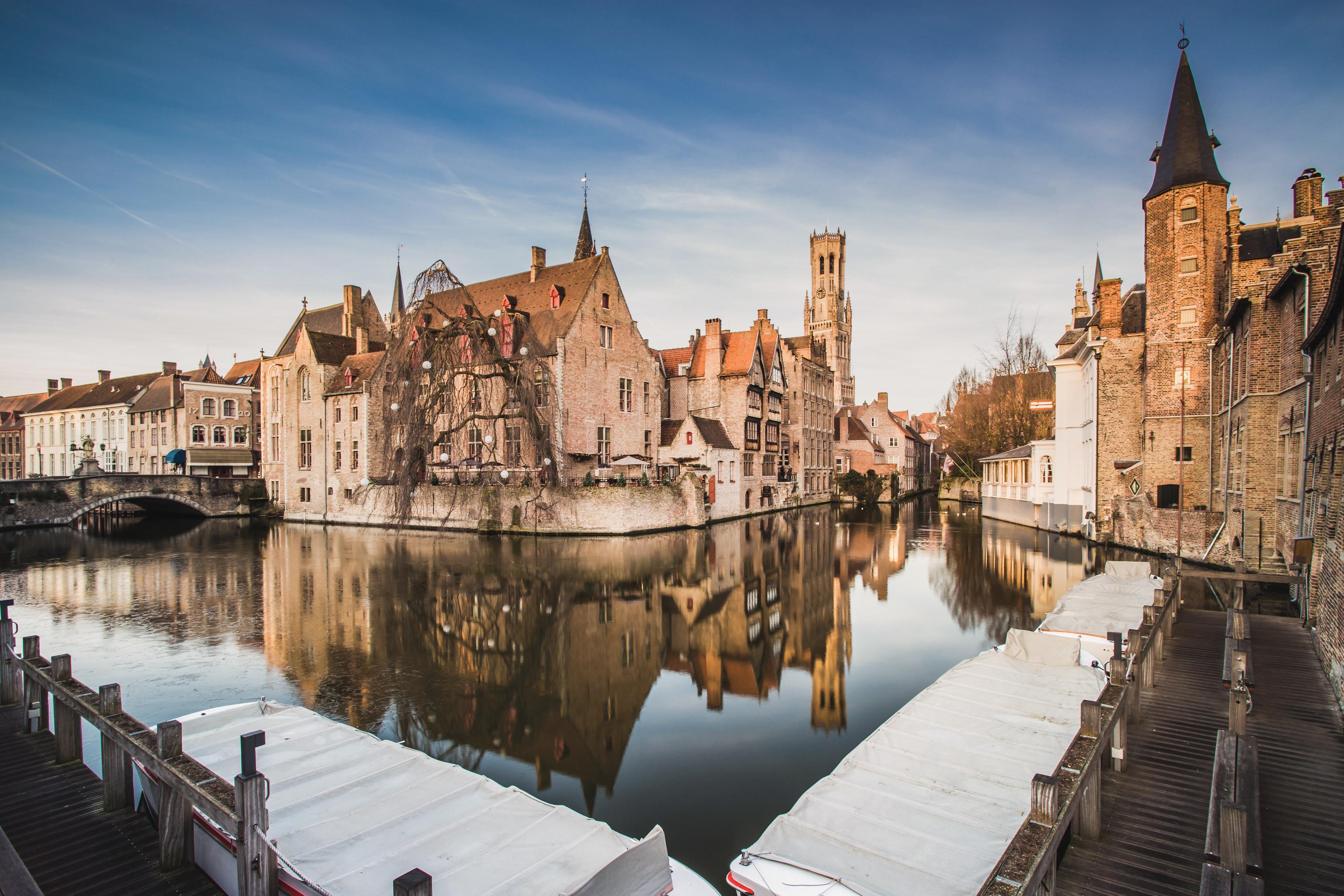
The second long day, and a plainer one: fast trains west across Germany to Frankfurt and on through Cologne and Aachen into Belgium, then a last hour across Flanders to Bruges. We plan it with unhurried connections at Frankfurt and at Brussels, and with lunch on board. Bruges repays the journey the moment you arrive. For much of the fifteenth century it was among the richest trading cities in Europe, the place where the Medici kept their northern bank, and your hotel stands where its rulers lived: the Prinsenhof, once the residence of the Dukes of Burgundy, now the Hotel Dukes' Palace, with a garden inside its walls. The evening is for the canals, which are quietest after the day visitors have gone.
Stay Hotel Dukes' Palace, Bruges
Day 12
Bruges
Begin at St. John's Hospital, one of the oldest hospital buildings in Europe, where Hans Memling painted four of his finest works for the hospital they still hang in; it is closed on Mondays. Across the street is the Church of Our Lady, and in it the Madonna and Child that Michelangelo carved for an altar in Siena and a Bruges merchant family bought instead, a few steps from the tombs of Charles the Bold and Mary of Burgundy. The city's collection of early Flemish painting belongs to the Groeningemuseum, which is closed for a long renovation from January 2027; the heart of the collection hangs meanwhile at BRUSK, the exhibition hall beside it. The altarpiece you saw in the Uffizi was ordered here, by the Medici agent Tommaso Portinari, and the painters on these walls are the ones Florence was looking at. The last afternoon is for the Belfry, the Markt and a boat on the canals, and the last dinner is ours to arrange.
Stay Hotel Dukes' Palace, Bruges
Day 13
Bruges
Brussels Airport is about an hour and a half from Bruges by train, and we time the morning to your flight. If you are traveling on, Brussels is two hours from London and an hour and a half from Paris by fast train, and the trip can end in either as easily as here.
Paris to Florence · 1 night
A train of restored 1920s sleeping cars with its own dining cars and bar, and the reason this trip sits among the Grand Trains. Your cabin is a sitting room by day and a bedroom by night, a steward looks after your carriage at any hour, and dinner, breakfast and lunch are served on board.
A Historic Cabin has a washbasin and no bathroom of its own; the Suites and Grand Suites have one. The train calls at Florence on only a few departures each year, and on other dates the trip begins at the Hotel Savoy.
Florence, Piazza della Repubblica · 3 nights
A Rocco Forte hotel on the square at the center of the old city, with the Duomo at one end of the street and the Ponte Vecchio at the other. The Uffizi, San Lorenzo and the station are each a short walk, and Irene, the restaurant, sets its tables on the piazza.
Rome, Via del Babuino · 3 nights
A Rocco Forte hotel between Piazza del Popolo and the Spanish Steps, built around a terraced garden of orange trees and roses that climbs the Pincian Hill. Jean Cocteau, staying in 1917, called it paradise on earth, and after a morning in the Vatican it is easy to see why.
Munich, old town · 2 nights
A grand hotel on a quiet street in the old town, a few minutes on foot from Marienplatz, Maximilianstrasse and the Hofbräuhaus, with a terrace on the roof. After the longest train day of the trip, it is the right door to come home to.
Nuremberg, at the station · 1 night
A grand hotel of the 1890s directly opposite the main station and at the gate of the old town, which is what a single night between two trains asks for. The castle and Dürer's house are a twenty minute walk through the old streets.
Bruges, Prinsenhof · 2 nights
The former residence of the Dukes of Burgundy, in the middle of the old city and five minutes on foot from the Markt, with a walled garden and a spa. Bruges has canal houses with better views, and none with this history.
United States passport holders enter the Schengen area without a visa for stays of up to ninety days and, once the European travel authorization known as ETIAS begins, register online before they fly. Your passport should be valid for three months beyond your return. The Entry/Exit System now records your fingerprints and photograph at the first Schengen border, which adds a few minutes at the airport in Paris and nothing afterward. Aboard the Venice Simplon-Orient-Express your passport is kept for you overnight, so that any formalities are attended to while you sleep, and the other borders on this route are crossed by train without a check.
One currency the whole way: France, Italy, Germany and Belgium all use the euro. Cards are taken almost everywhere, on the trains included; carry a little cash for the smaller places, in Germany above all. Tipping is modest throughout: in Italy the service charge on the bill is the tip, and in Germany and Belgium it is enough to round up. Florence and Rome charge a nightly city tax, payable at the hotel.
Spring and early autumn are mild in Florence and Rome and cooler north of the Alps, and Bruges can be wet in any month, so bring a warm layer and a waterproof. Dinner aboard the train is an occasion, and evening dress is part of it: a dark suit or black tie, and a dress to match. The churches of Italy ask for covered shoulders and knees, the Vatican most strictly. Comfortable shoes matter more than anything else here, because you will walk a great deal, often on cobbles.
The cabin aboard the Venice Simplon-Orient-Express has racks for an overnight bag and little more, so pack what you need for the night separately; we will tell you exactly how the larger cases travel when we book. On the other trains you carry your own bags on and off, so one wheeled case each and a small bag for the day is the right amount. Every hotel holds luggage before check in and after check out.
Every train after the first is in first class, with a reserved seat: Business class on the Frecciarossa, and first class on the Railjet and the ICE, where the cars are quieter and there is room to spread out. Where a day uses two or three trains, the tickets are separate, each its own contract with its own railway, so we plan every connection with time to spare. The Uffizi, the Vatican Museums, the Brancacci Chapel, the Borghese Gallery and the dome in Florence all run on timed tickets, and we reserve them when we book the trains.
The Venice Simplon-Orient-Express, with its narrow corridors and original doors, is not suitable for wheelchair users, and its operator says so plainly. Begun in Florence, the trip is far kinder: the main stations are step free, and the Frecciarossa, the Railjet and the ICE all carry wheelchair spaces that are booked with the ticket. The old streets are another matter, cobbled in Florence, Nuremberg and Bruges, and the dome in Florence is reached only by its stairs. Tell us what you need and we will shape the days around it.
BespokeItaly
Venice · Florence · Siena
The trains: Frecciarossa or Italo · Regionale, Firenze to Siena · Regionale to Florence, then Frecciarossa or Italo to Rome
9 DaysFirst Class & Sleeper TrainsFrom $4,450
View Trip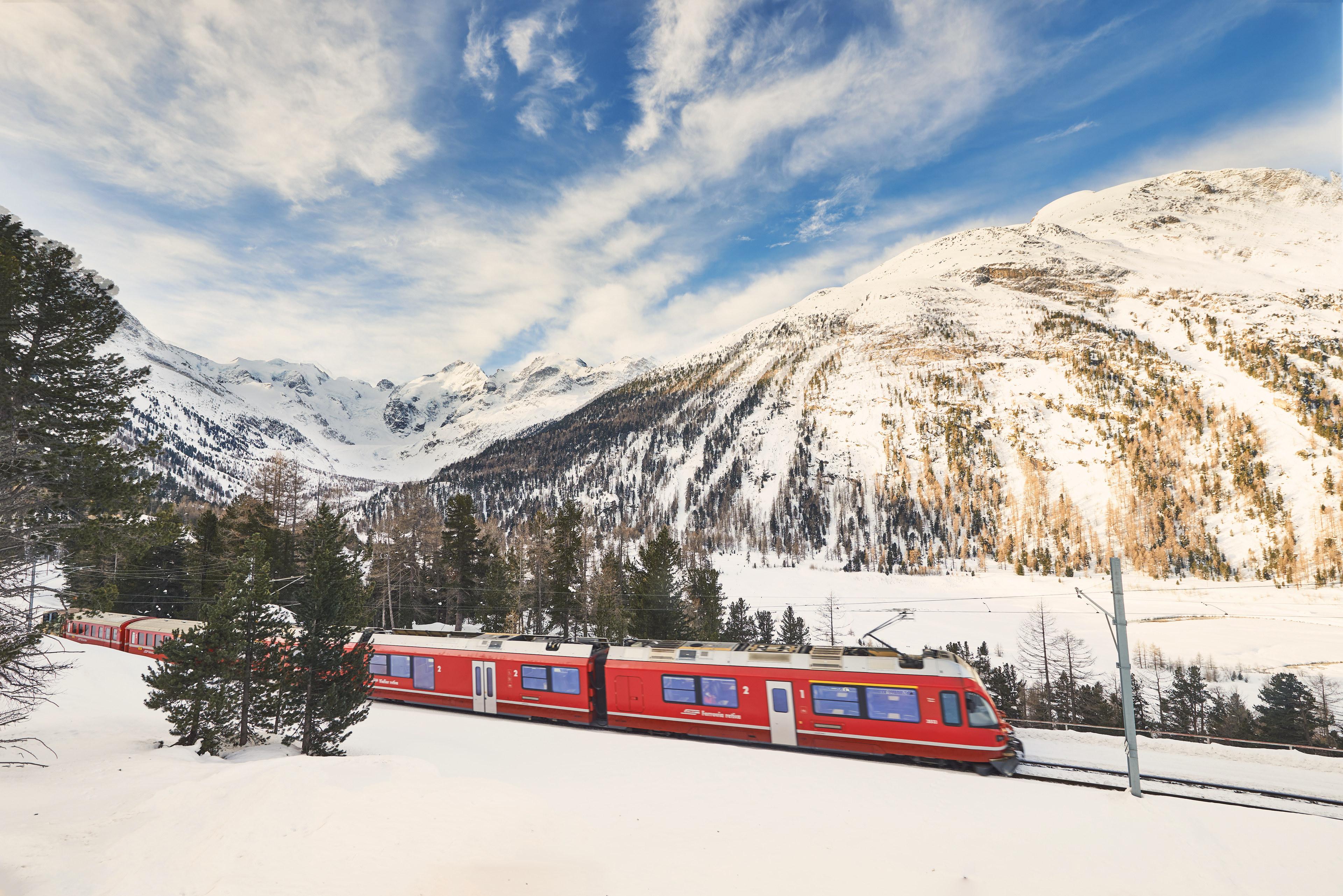 Signature
Switzerland
Paris · Verona · St. Moritz · Zermatt
The trains: Venice Simplon-Orient-Express · Frecciarossa to Milan, the Lake Como line to Tirano, then the Bernina line · Glacier Express, Excellence Class
10 DaysGrand TrainsFrom $11,750
View TripYou are welcome to take this trip as written, shape it to your liking, or make it the starting point for something entirely your own.
Every inquiry is read personally, and we reply within 24 hours.